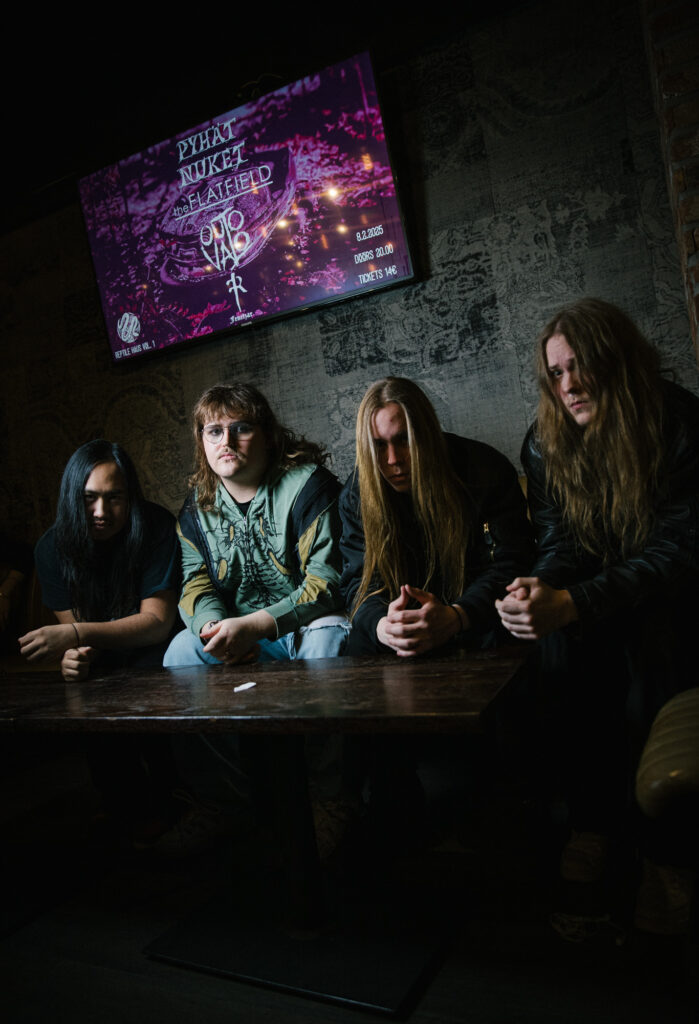
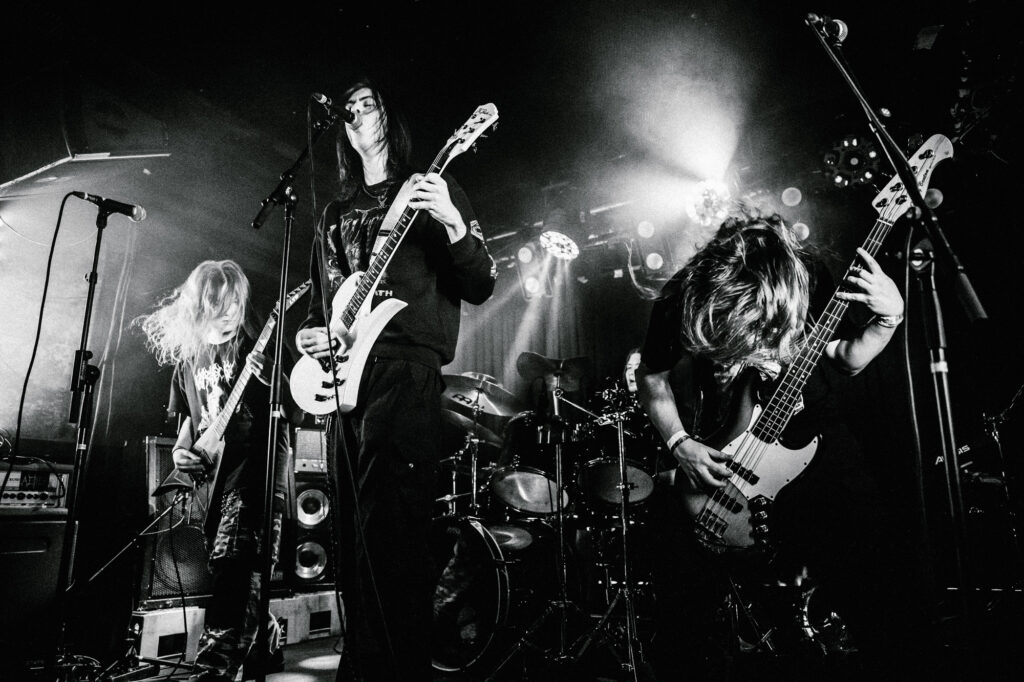
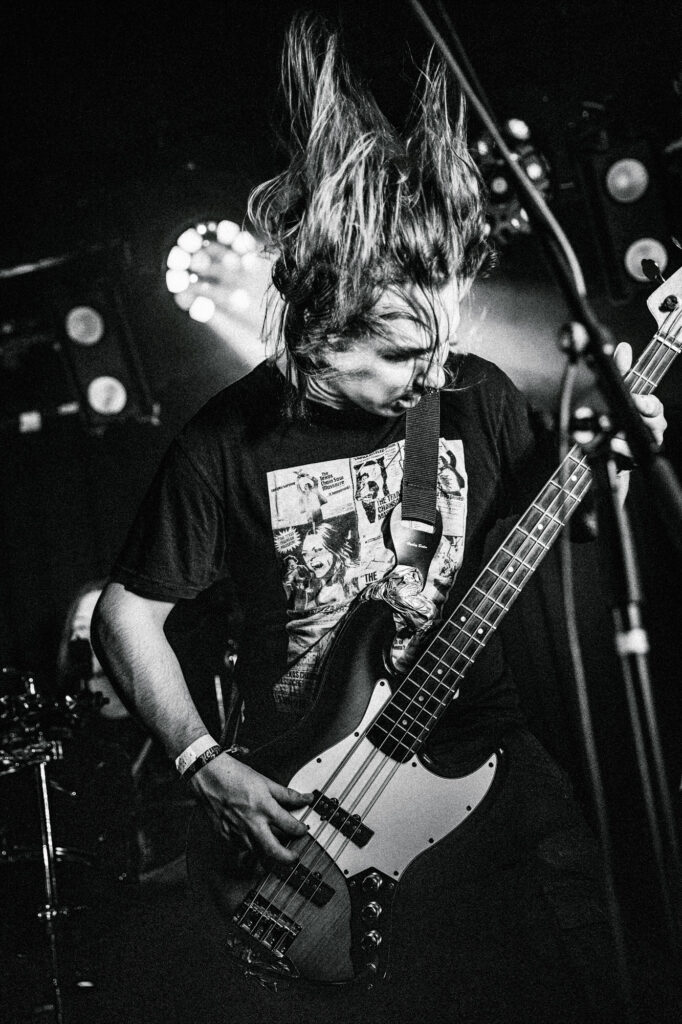
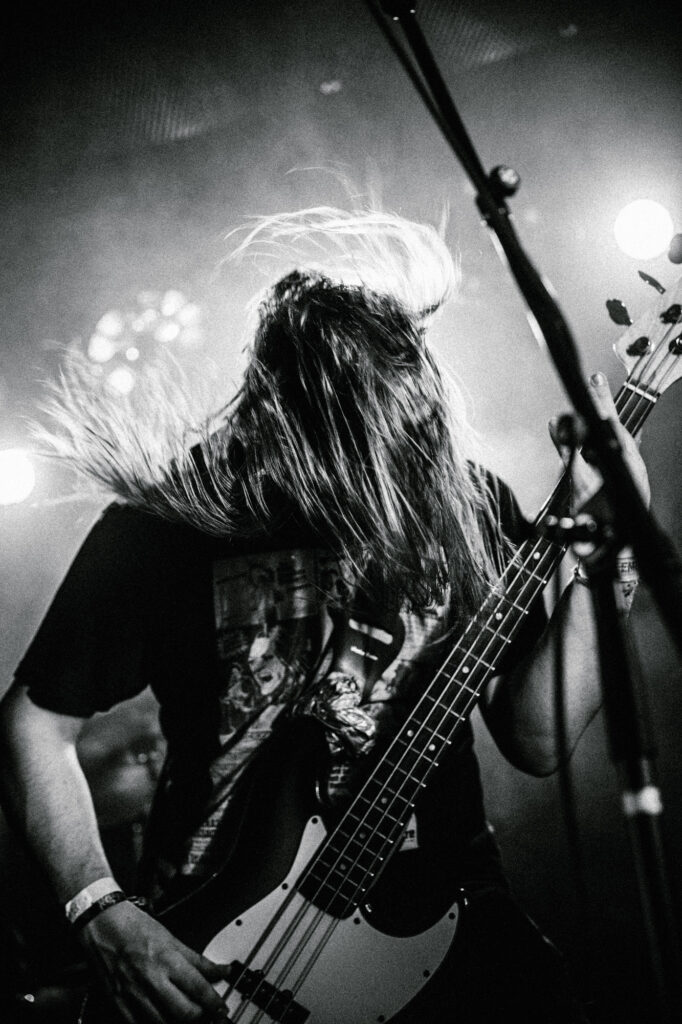
Finland is currently being swept by the third wave of death metal – with even the most tradition‑minded bands made up of musicians barely in their twenties.
GramexPress asked Cryptic Hatred, Azatoth, Malformed and Whisper why death metal has become the leading genre of youth‑driven metal in this decade.

In the greyest corner of the Helsinki metropolitan area, on the border between Espoo and Vantaa, lies the Juvanmalmi industrial zone. After crossing Ring Road III and weaving past countless car repair shops and spare‑parts dealers, something blue catches the eye.
It is not a lake; Lake Bodom is still five kilometres away, the site of a murder mystery that, thirty years ago, gave its name to a world‑famous death metal band from Espoo.
The blue hue comes from freight containers stacked two storeys high. Inside them, several death metal bands rehearse. The youngest members are just 15 years old, and even the oldest are only in their early twenties.
Inside the containers, time seems to have stood still. Posters of Morbid Angel and the Misfits line the walls, while racks are strewn with V‑shaped metal guitars and other traditional band instruments.
Nothing really suggests that these are Gen Z rehearsal spaces—unless one counts the fact that, instead of empty beer bottles, the tables are littered with cans of energy drinks.
And yet, inside these containers, the next chapter of Finnish metal music is quietly beginning to take shape.
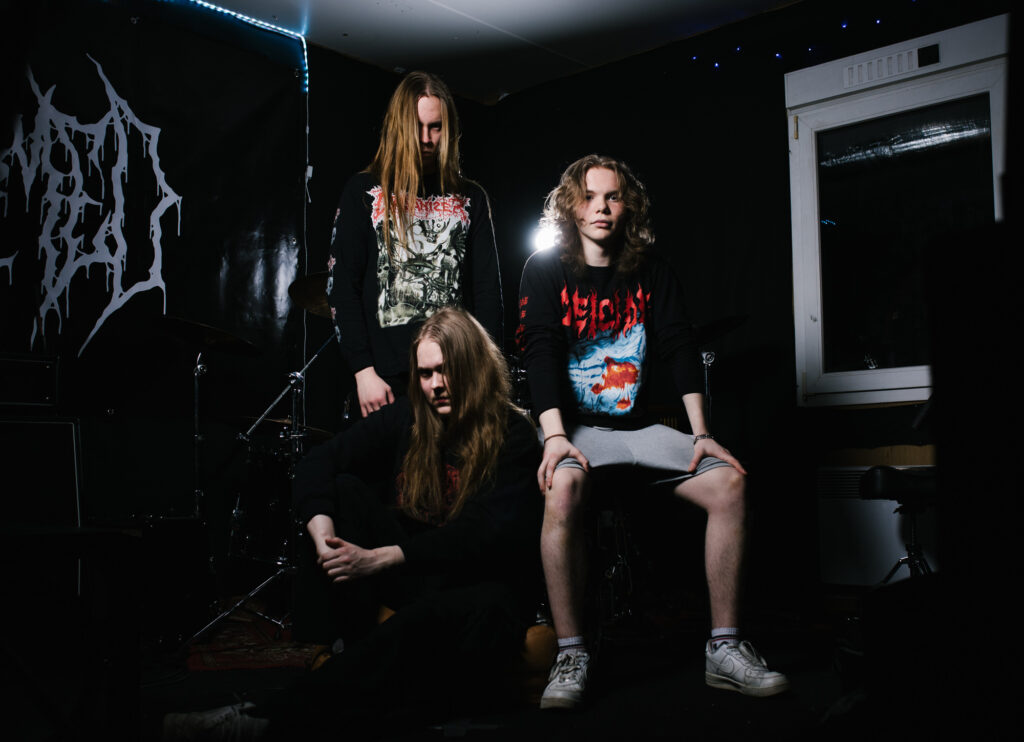
In the early years of the 2020s, something unexpected happened: a wave of underage Finnish teenagers suddenly began playing vicious, fast death metal that sounded strikingly similar to the genre pioneered by their fathers’ generation.
In Klaukkala, Cryptic Hatred emerged; in Vantaa, Azatoth; in Riihimäki, Gorekaust; in Helsinki, Disguised Malignance, Malformed and Whisper; in Lahti, Immerits and Obscenum—and so on.
Not a single member of these bands had been born during death metal’s first wave in the 1980s and 1990s. Yet they were all united by a tradition‑conscious, brutally technical sound and aesthetic, drawing heavily on classic bands such as Morbid Angel, Deicide and Cannibal Corpse.
What gave rise to the phenomenon? At least not solely the musical tastes of a father or older brother.
“My dad definitely didn’t listen to metal. The influences didn’t come from home, but from listening to Morbid Angel together with our bassist Pauli when we started playing,” says Malformed’s guitarist and vocalist Eetu Hyvönen, 20.
Whisper’s vocalist‑guitarist Tobias “Stuba” Huczkowski, 20, by contrast, traces his metal awakening directly back to his father. The week before the interview, the two had gone together to Helsinki’s Kulttuuritalo to see a concert by the American progressive metal pioneers Queensrÿche.
“My dad is a huge fan of Iron Maiden, Nuclear Assault and TNT. At some point I started getting interested in metal myself and asking him for album recommendations. First I discovered thrash, then grind, and finally death metal—and immediately I was like, this is it,” Stuba says.
The first wave of death metal swept across Finland at the turn of the 1980s and 1990s, at a moment when thrash metal had watered down into wimpy radio metal and hardcore punk was going through a temporary lull.
Suddenly, all over the country, rough‑edged flannel‑shirted bands began to emerge, growling about rotting body parts and souls abandoned by God, crouching in graveyards with their faces hidden behind curtains of hair. They differed from their foreign counterparts in, for instance, their crushing heaviness and, at times, their peculiar rhythms and melodic choices.
The popularity of death metal in Finland has occasionally been explained by the country’s darkness and cold. That is nonsense: Finland is actually brighter than normal for half the year, and the genre’s greatest classics were created in sunny Florida.
In reality, death metal bands are formed because people get excited about good death metal records. Or because the school lunch was terrible—like it was at a lower secondary school in Klaukkala in 2018. That was enough to drive ninth‑grade friends Eemil Lajomaa and Tatu Saves into the music classroom, where they started playing Slayer and other favourites of the time.
“It was so much fun that we kept going back to the music classroom again and again,” says Cryptic Hatred’s vocalist‑guitarist Eemil, 21, describing the band’s origins. “Once we’d found like‑minded friends to join us, we decided in the spring of 2019 that now we had a band.”
From the very beginning, it was clear that Cryptic Hatred would play old‑school death metal.
“Cannibal Corpse and Deicide were, in our opinion, the best bands. And since we wanted to sound good ourselves, we started making music in that style.”
Cryptic Hatred played its first show at a scaled‑down edition of Helsinki Deathfest in August 2020, curtailed by coronavirus restrictions. Many things went wrong. First, tables and chairs had been set up at Tiivistämö, forcing the audience to sit throughout the entire performance. Second, the young band was so nervous that their legs were shaking. Third, during the very first song, Tatu dropped a drumstick, which rolled agonisingly far behind the stage. The band had to restart the set.
Despite this, things moved quickly. When Cryptic Hatred returned to the same stage two years later, it did so at the Tuska festival, performing in front of an audience of several hundred.
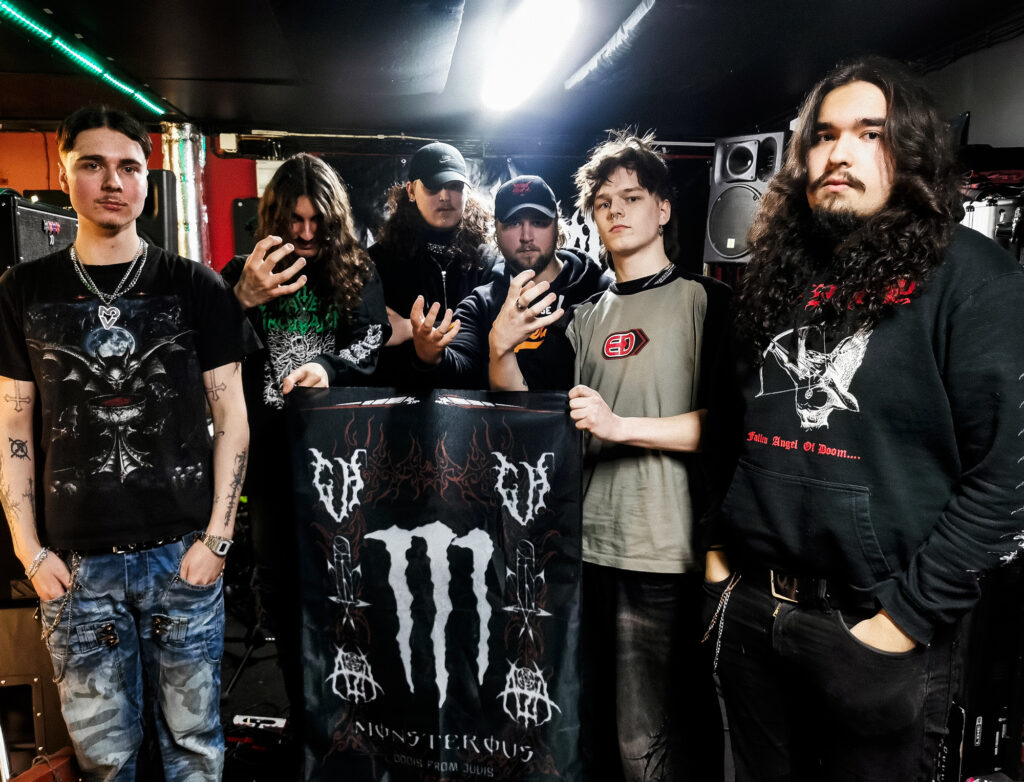
In the mid‑2010s, it seemed that most young people who had fallen in love with metal wanted to play thrash or speed metal. The genre was driven forward by bands such as Helsinki‑based Ranger and Jyväskylä’s Lost Society, whose frenzied live shows brought high‑top sneakers and denim vests back onto the streets.
But then the thrash hype faded, and many young musicians turned their attention to death metal.
“Around the turn of the 2020s, something happened, and young people started liking death metal a lot. It’s just kept growing and growing. I can’t name a single new thrash metal band right now. Everything is death metal,” says Cryptic Hatred guitarist Joonas Honkanen, 22.
Juuso Hämäläinen, 19, drummer for Azatoth and Disguised Malignance, suggests that one reason for the death metal boom was the oppressive atmosphere created by the coronavirus pandemic.
“In thrash metal, things are more about having fun. But then corona hit, and you couldn’t go anywhere anymore. New frightening things appeared, along with negative thoughts. Listening to and making death metal provided an easy channel for expressing those aggressive thoughts as well,” Juuso says.
What could be more death metal than a global virus that killed millions of people, shook societies and spread fear and anxiety across the world?
Death metal’s appeal among young people has also been strengthened by the genre’s vitality and stylistic diversity. That, at least, was what prompted Whisper’s Stuba to switch from thrash to death metal a couple of years ago.
“I used to have a thrash band that never really took off,” Stuba says. “When it fell apart and I heard that two of my friends were starting a death metal band, I wanted to join immediately.”
The new musical direction was so inspiring that Whisper began recording its first demo during their very first rehearsals. The rehearsal space was the former guitarist’s mother’s apartment, and the demo was recorded using GarageBand on a Mac.
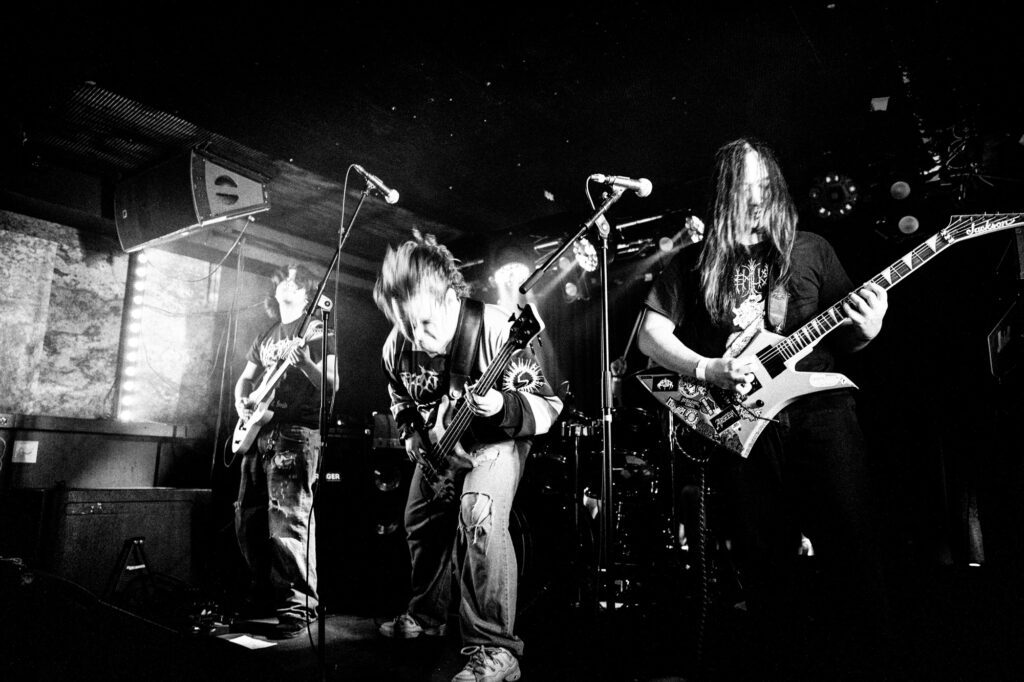
In articles about Gen Z death metal, boomer writers often dwell on their misty‑eyed delight at how wonderful it is that young people are once again playing “proper” metal. But the phenomenon is about more than simply reheating the past.
In Whisper’s music, you can hear the progressive and cosmic tones of the American band Blood Incantation, founded in the 2010s. Cryptic Hatred’s latest album, Internal Torment (2024), features modern production choices, from bass drops to sound effects and a cleaner overall sound. Azatoth’s sound draws influences from black metal, while Malformed has shifted from its early Cannibal Corpse–style onslaught toward something more hook‑driven.
All of the bands swear by the old‑school aesthetics of death metal: album covers have to look a certain way, hair has to be long, and dark clothing is mandatory on stage. But that does not mean that some of the musicians wouldn’t also like to dress in ways that reflect their own time and personal style.
Cryptic Hatred has even been mocked for this, with people saying that its members look like rappers.
“It’s been a bit strange for us that people are so interested in our clothes,” Eemil says. “I see it as a richness that we can look the way we want and still play this kind of music. For us, the most important thing is the music.”
The new generation of death metal is also marked by a heightened sense of awareness, partly inherited from British death metal and grindcore scenes, but also shaped by today’s woke culture: safe space principles are followed at shows, and, for example, far‑right extremism is taken seriously.
“Through the younger generation, there’s a really strong message against far‑right stupidity,” confirms Malformed’s Eetu.
Some of the young bands have played benefit gigs, for instance against the war in Ukraine. Shows have also taken place at the anarchist squat Makamik, which burned down in Helsinki’s Kumpula district two years ago.
Some bands also express their views in their lyrics: Whisper has covered the anarcho‑punk band Doom’s song Nazi Die at every show, and the band’s Gravemind EP (2024) includes a track titled Redisembowelment that deals with the ethics of eating meat.
“It’s maybe a bit hypocritical, since all of us still eat meat, at least for now. But it’s something you think about from time to time, of course. Lyrics are really important to me, and I’ve tried to deal with things beyond just the zombie and gore department,” Stuba says.
He says he is pleased that death metal shows today attract more than just the most stereotypical metal crowd.
“People aren’t just sweaty old metal dudes anymore.”
The vitality and sense of community in the youth‑driven death metal scene are most clearly visible in Juvanmalmi.
Inside the industrial area’s blue containers, several death metal bands rehearse, and their number has only grown year by year. The latest arrival to “Juviksen” is Malevolent Shrine, whose lineup includes a female lead guitarist—still a rarity in the genre. A sign of the times, too.
“A crazy number of young bands have moved here, and this has become a proper death metal hub,” says Azatoth’s bassist‑vocalist Joel Das, 18. “Were there any death metal bands here besides Cryptic Hatred when we moved in? No.”
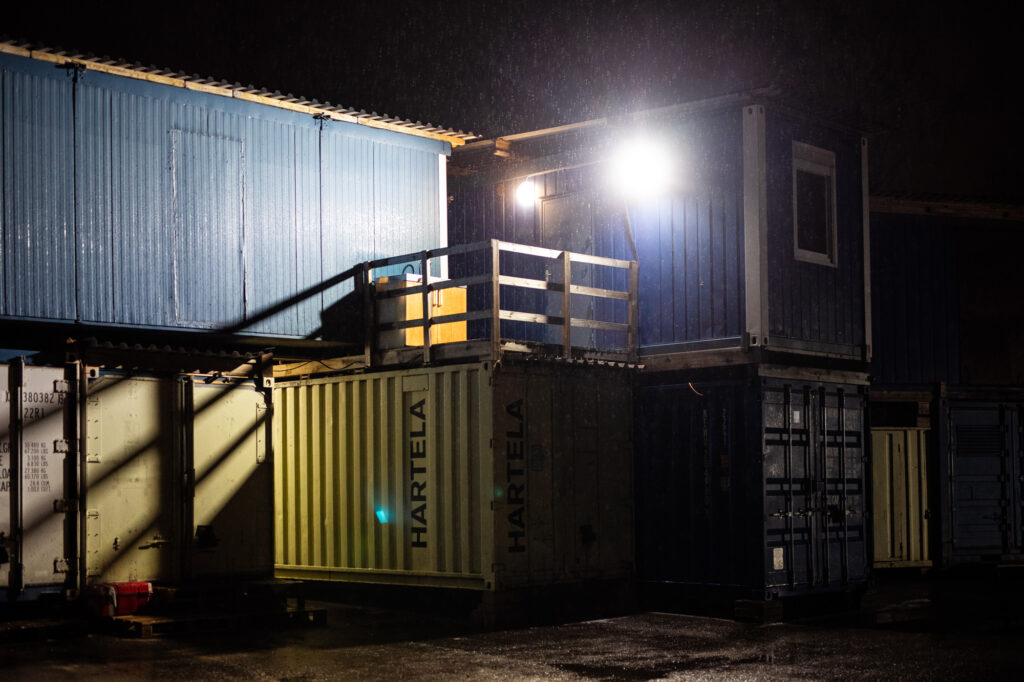
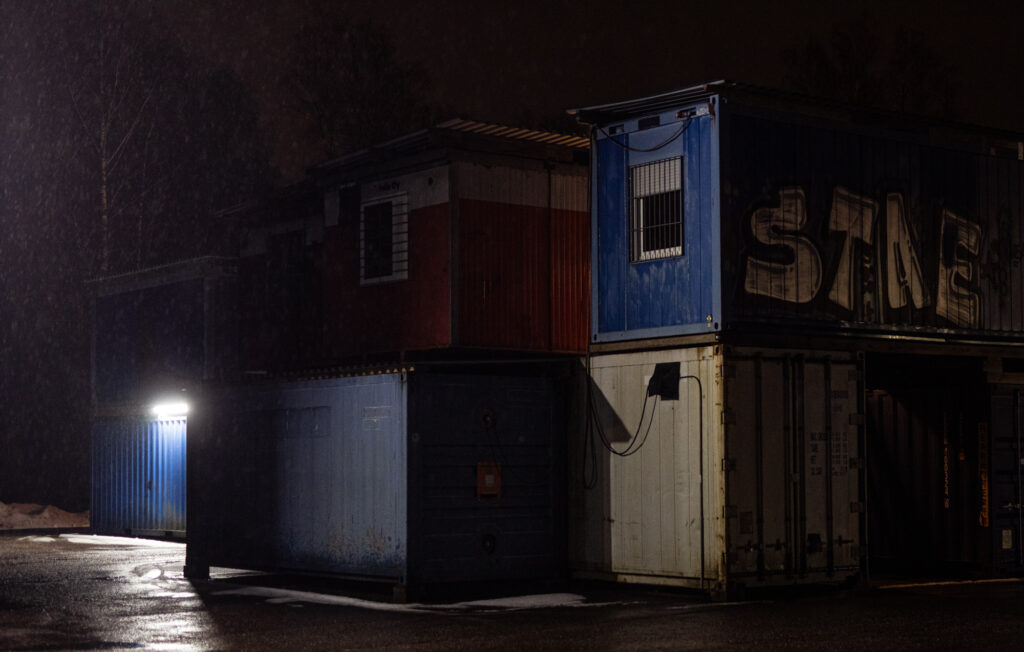
If you want to record a demo or an EP at Juvis, you can simply walk up to the container upstairs, where Juuso from Azatoth and Disguised Malignance runs a low‑budget recording studio. In addition to Juuso’s own bands, the container has been used to record releases by, for example, Whisper, Gorekaust and Obscenum.
In the summers, Konttifest is held in Juvis’ inner courtyard, a do‑it‑yourself festival for young death metal enthusiasts that came together almost entirely by accident.
The first Konttifest was organised in 2021, when Juuso and Eemil wanted to create at least some excitement in the middle of a pandemic summer. In the background was also Juuso’s desire to finally play a proper show with Azatoth, as the band’s first appearance had gone badly wrong at a livestreamed Helsinki Deathfest.
There was little hesitation. The rehearsal community rolled up its sleeves, spread the word across various social media channels, and hauled drums, amplifiers and a barely adequate PA system down from the containers onto the asphalt. There was no stage, and the sound was terrible, but that didn’t slow things down.
“I remember arriving here and seeing the entire yard completely packed with people, mostly young, and everyone in a great mood,” Joonas recalls. “There was this feeling that something was happening. I’d never seen anything like it before.”
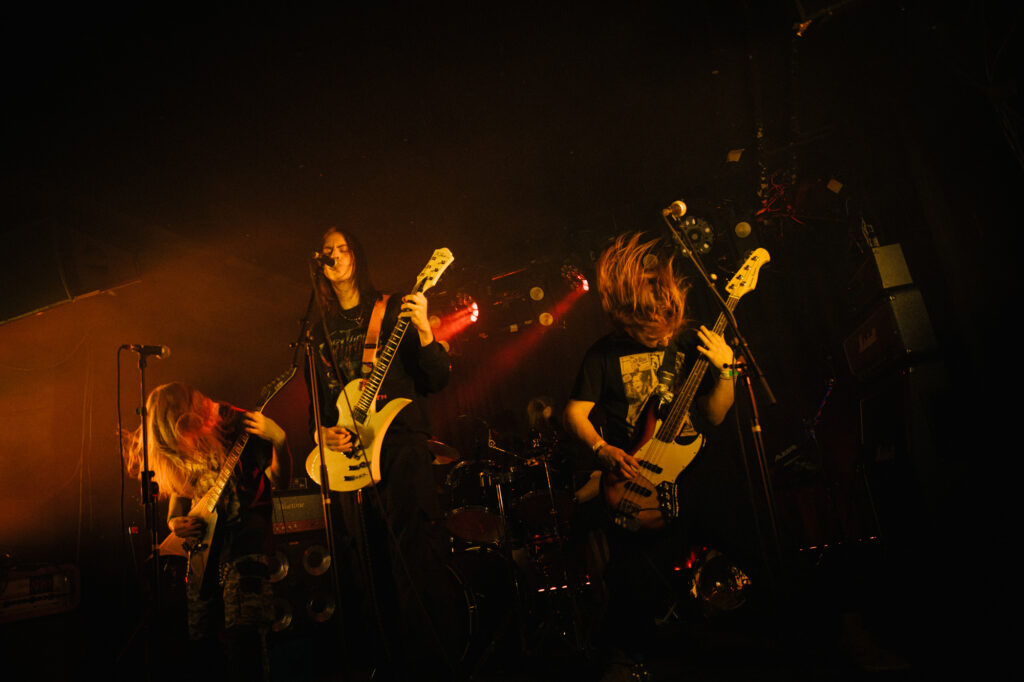
Despite death metal’s increased popularity, the genre remains marginal among young people—just as it arguably should be.
Kari Tervonen, chief researcher at Omnicom Media Group, has studied the phenomenon. Each year, he compiles a report on music consumption in Finland together with Teosto and Musiikkituottajat.
Tervonen confirms that in 2024, only around 10 per cent of 13–18‑year‑olds said they were fans of metal, while 17 per cent reported that they liked listening to it. In the 19–25 age group, the corresponding figures were 19 per cent and 17 per cent.
Compared to 2015, metal has lost as much as a third of its fan base. One explanation is the lack of new major breakthrough names.
“When you look at under‑20s, Metallica is the most‑favoured name. In metal, the share of listening to old catalogue music is by far the highest, whereas in other genres the most popular names are current artists,” Tervonen says over the phone.
This does not mean that metal isn’t an extremely vibrant genre that constantly produces new names. It has simply become more and more a pursuit for true enthusiasts.
Instead of metal, today’s young people are more interested in rap and pop. Nearly one third of 13–25‑year‑olds said they were fans of rap last year. Pop also increased in popularity, especially among 19–25‑year‑olds.
Members of Cryptic Hatred, Azatoth, Malformed and Whisper recognise the report’s findings. They say they were often fairly alone at school in their enthusiasm for death metal, but that it didn’t really matter: classmates didn’t give them questioning looks, and within friend groups it wasn’t a problem to listen to a mix of different styles.
This fits the profile of Generation Z. Music is no longer as strong a marker of identity or distinction; instead, it is consumed in a more relaxed, entertainment‑oriented, functional and individual way. At the same time, passionate hobbyists still exist.
“Fans of more marginal music, like metal or jazz, are just as crazy as they ever were,” Tervonen points out.
When Cryptic Hatred, Azatoth, Malformed and Whisper started playing shows, most of their members were still underage.
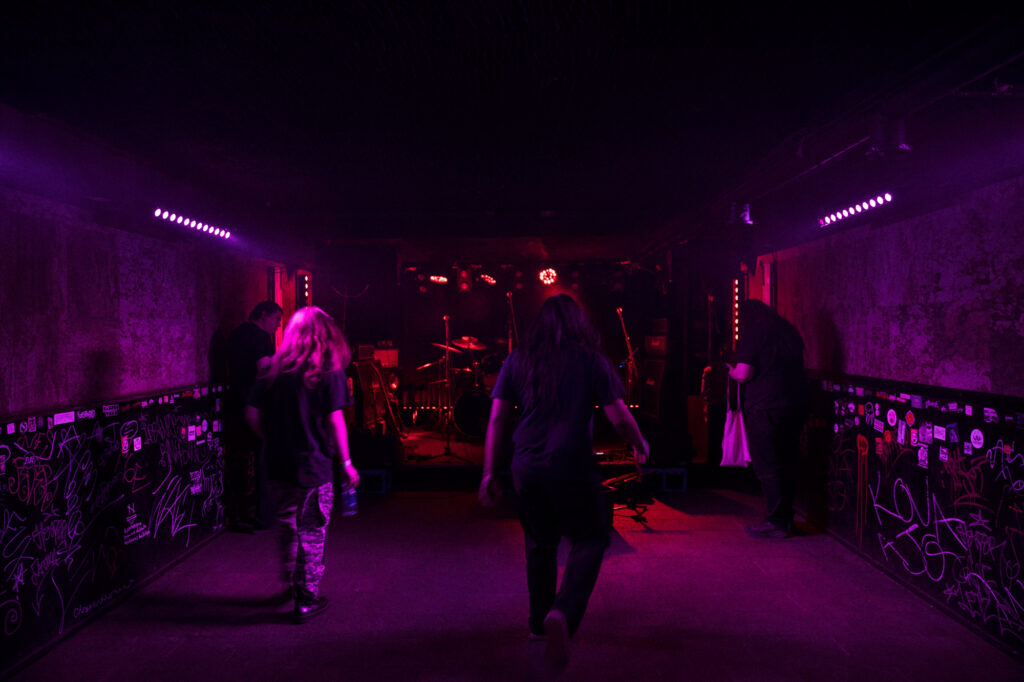
In practice, the available venues were youth centres, Oranssi, and Rauhanasema, which focuses mainly on punk shows. Nosturi was demolished to make way for housing in autumn 2019, and since then no new all‑ages venues have emerged in the Helsinki metropolitan area.
“I think that’s a pretty big problem,” Joonas says. “There are some individual shows that are also allowed for under‑18s, but basically the options are big concerts, like Metallica at the Ice Hall, or youth centres, or—with a bit of luck—an all‑ages show at Tiivistämö. And of course Oranssi.”
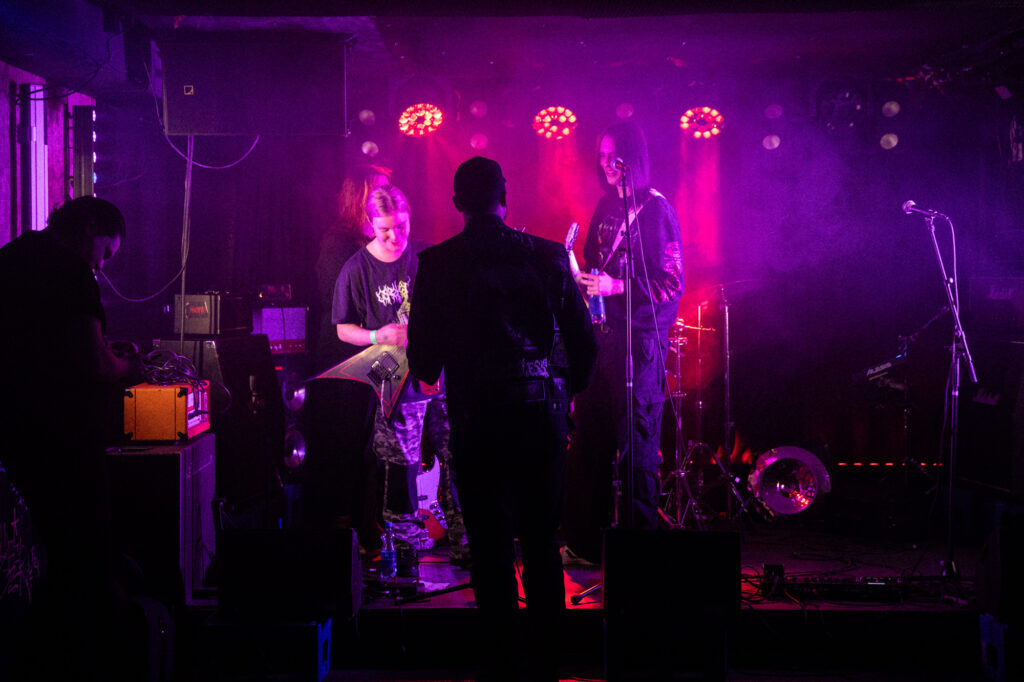
Oranssi’s particularly prominent role as a youth venue is reflected in the fact that around 35 death metal shows have been held there over the past year and a half.
Helsinki Deathfest, which organises an annual death metal festival, has in turn tried to patch the gap in all‑ages shows by putting on an event called All Ager Rager at Suvilahti’s Tiivistämö. Held in the spring, the event is, according to Juuso, the best thing that has happened to the younger generation of the death metal scene.
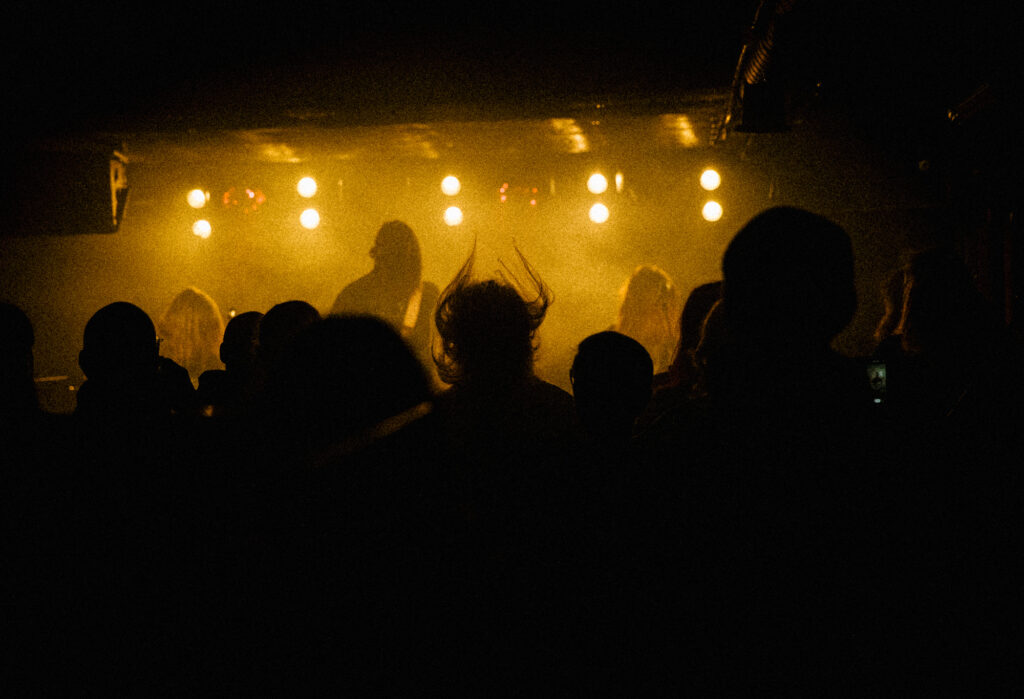
“Youth shows tend to be really intense in general,” Eemil continues. “The crowd is moving the whole time, and it’s not just standing at the back with beers in hand, nodding your head a bit. That happens too, but mostly people are pretty fanatical, and there was a pit at every show.”
He recalls also playing underage at Loose and Lepakkomies. At those gigs, however, you had to wear a wristband that prevented alcohol sales, and after the performance you had to leave immediately.
Azatoth solved the problem in a different way. Its members simply never told promoters that they were underage.
During the first wave of death metal, bands had to duplicate their demos onto cassette tapes, put them into envelopes with stamps glued on, and mail them to their tape‑trading contacts. Today, anyone can make their music available to the entire world with a single mouse click. So do young death metal bands still need record labels for anything?
“I think the PR work that labels do is valuable,” Joonas begins. “If you’re releasing a record as a new band, it’s really hard to get noticed. A support structure can help spread the word. There’s more bureaucracy, but if the label is good, doesn’t have too many bands, and is genuinely interested in my band, it can definitely be worth it.”
“And in a way it does make things easier when you’re only responsible for the music,” Eetu continues. “In our case, the label has also handled the physical pressings, so that hasn’t caused us any expenses.”
Despite being digital natives, all of the musicians consider it important that their music is released in physical formats in addition to streaming services.
“There’s a more authentic feeling to listening to vinyl. It feels more like actually listening to music, whereas scrolling through Spotify playlists is more like consuming music,” Eetu says.
All of the bands interviewed for this article have so far released a handful of demos and EPs. Cryptic Hatred is the furthest along: it has released two full‑length albums, the most recent of which came out via the Italian label Time to Kill Records.
The deal came about when American Jason Nerherton—who ran a death‑metal‑oriented record shop and label in Helsinki and released Cryptic Hatred’s debut album—tipped the band off about the company. Time to Kill liked what it heard and offered Cryptic Hatred a one‑album licensing deal.
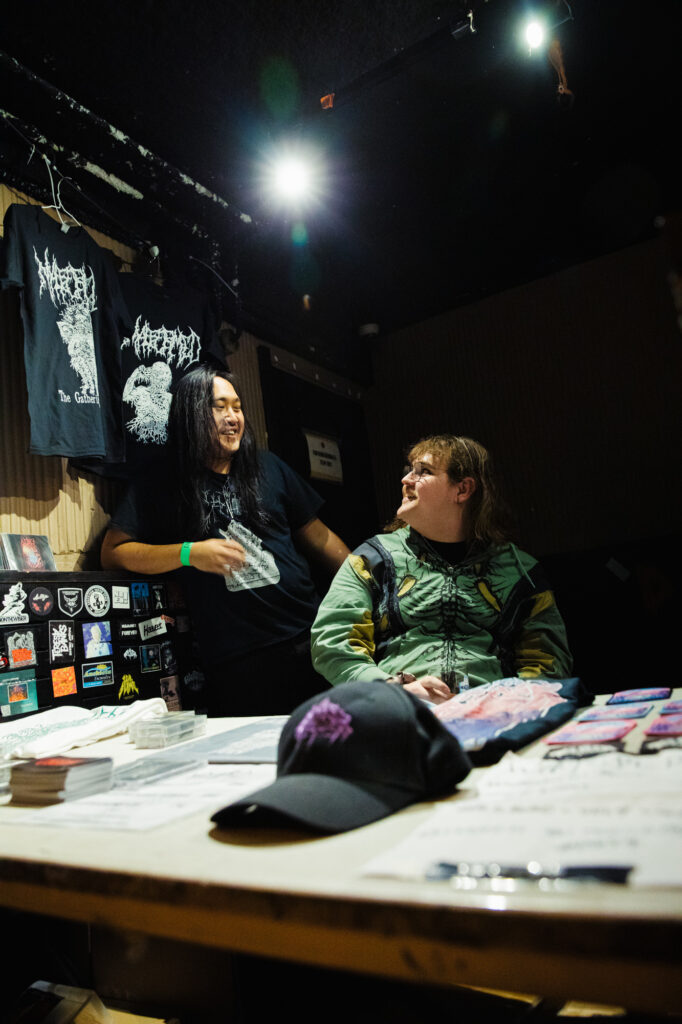
Malformed’s most recent EP, The Gathering of Souls (2023), was released by the Danish label Extremely Rotten Productions.
Whisper is still at such an early stage in its career that it hasn’t yet had time to think about record label matters. Azatoth, too, remains a self‑released band for the time being, if one does not count the split cassette made with Cryptic Hatred, Obnoxious Path of Reincarnation (2023), which was released by the small Täh! label run by the young members of Riihimäki‑based Gorekaust.
“If you can manage as an independent, that’s of course better, because then you have more control over things. In the rap scene, for example, all the biggest artists right now are independent,” Juuso says. “But whether you have a label or not, the music has to be such that it doesn’t blend into the masses. Otherwise, nothing will save it.”