It is the mid-2000s. Primary school-aged Daniel Okas is racing to school on his bicycle alongside his siblings.
A heavy snowfall during the night has made cycling painfully slow. Sweat soaks the young boy’s back, partly from the physical effort and partly from sheer anxiety.
What if I’m late?
Fighting back tears, Okas pedals harder while scolding himself.
I should have left earlier.
He reaches the schoolyard, parks his bike and rushes into the classroom, but the clock is unforgiving: he is three minutes late.
The embarrassment is overwhelming. It feels like the end of the world.
Because he is not the kid who arrives late.
He is punctual. Reliable. The kind of person who gets things done.
Without knowing it, young Daniel Okas has just learned the first lesson in a course whose ultimate goal is breaking into the international music industry.
Lesson One: Don’t be late.

Fast forward nearly twenty years.
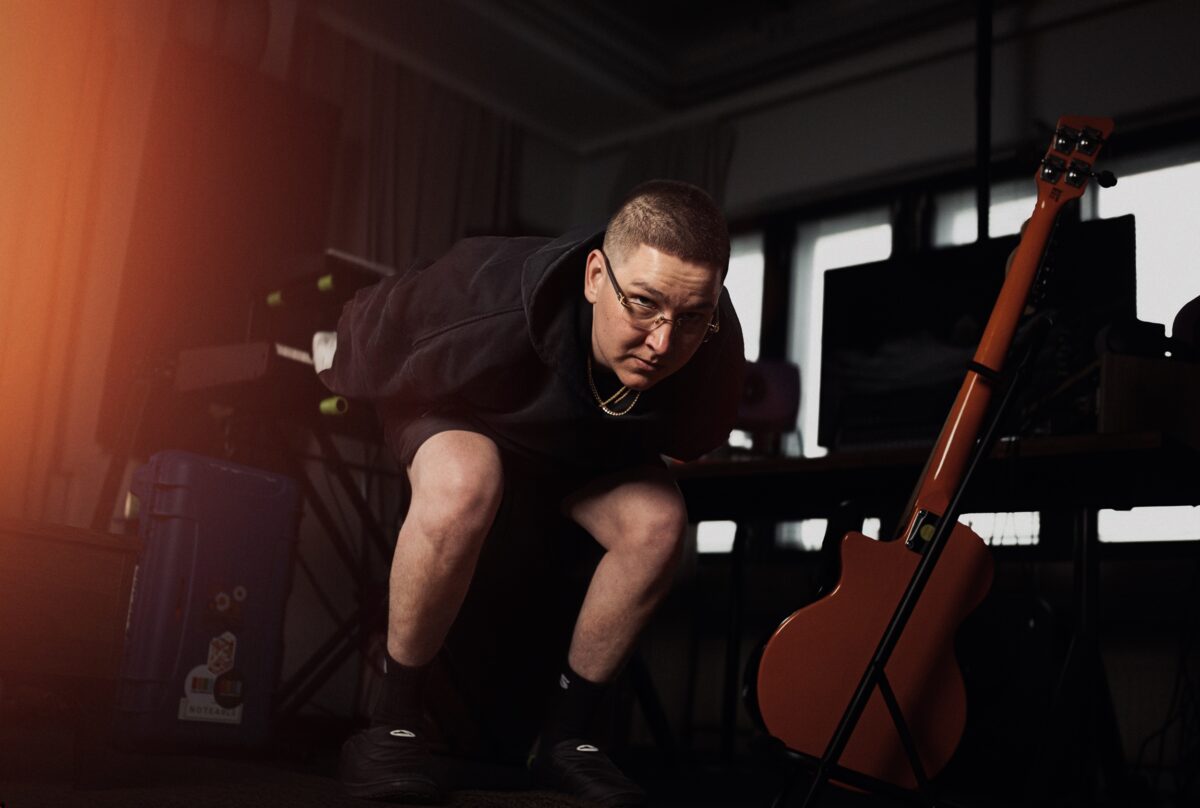
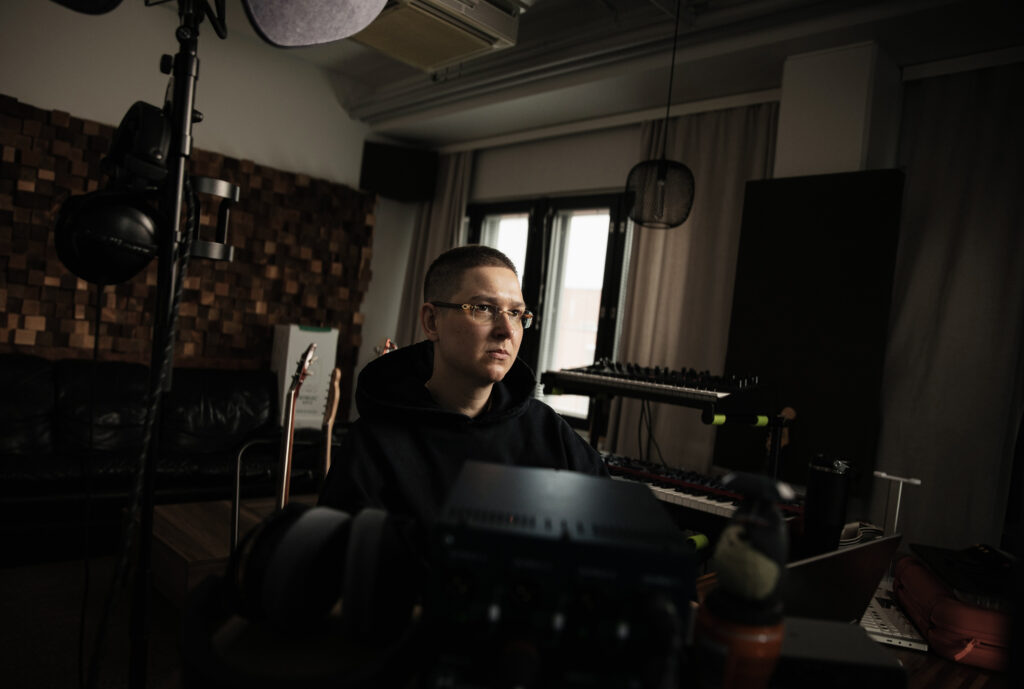
Daniel “Danitello” Okas (born 1998) is sitting in his studio at Fountain Productions in Helsinki’s Herttoniemi district.
A few days earlier there had been reason to celebrate. At the beginning of the summer, the music he had produced and co-written surpassed the milestone of one billion streams.
“It’s crazy,” Okas says.
“I’m a guy who moved from Kankaanpää to Lahti because of ski jumping, and now we’re here. I don’t even really want to think about it because it’s so unbelievable.”
From the age of eight until nearly adulthood, Okas devoted himself to ski jumping. At first glance, ski jumping and music production seem to have little in common. But look closer.
Both require relentless training. And even when you do everything right, success is never guaranteed.
Almost every professional ski jumper is capable of winning a competition, yet year after year the same names remain at the top. The same applies to music producers.
“There are many producers in Finland and around the world who are just as good as I am,” Okas says.
The very best stand out because they repeatedly find a state of flow. The timing of the take-off is perfect. The body settles into the ideal position in flight. The more often it happens, the more confidence you gain and the easier it becomes to trust your instincts.
But there is one thing about intuition:
You have to earn it.
Berlin. Los Angeles. London.
The names roll off Okas’s tongue naturally as he describes his recent work.
“Berlin has been the main hub for quite some time,” he says.
That is largely due to a publishing deal recently signed between Fountain Productions and a Berlin-based publisher. The story behind that agreement perfectly illustrates how Okas approaches his work.
He was invited to a songwriting session in London with Mike Needle and René Miller, the accomplished duo behind the catalog of One Direction, among many others.
“They’re incredibly intense. They work from ten in the morning until midnight. When there’s a ‘break’, you’re recording backing vocals.”
Okas wanted to make an impression.
After fourteen-hour sessions, he stayed up every night mixing the songs so they would be waiting, finished, the next morning.
That has always been his approach to work: exceed expectations.
“I realized very early on that there’s a surprisingly simple way to stand out in the music business: be on time.”
The strategy paid off. After several business breakfasts and lunches, Okas secured a deal that was both artistically and financially significant.
It cost him some sleep, but he considered it worth the investment.
Lesson Two: Exceed expectations.
Burna Boy, G-Eazy, Tom Grennan, Mirella, Costi. Grammy and Emma Award nominations. Collaborations connected to artists such as Drake and Mick Jagger. More than 300 released songs. Berlin, London, Los Angeles.
A long list of achievements could easily sound boastful.
Yet when Okas speaks, there is no arrogance.
Part of it is his charisma. Unlike many successful artists, he lacks any trace of elitism. He comes across less like an industry insider and more like a down-to-earth ski-jumping enthusiast from Lahti.
Perhaps it is because he genuinely dislikes the superficiality that often comes with the business.
The tendency to see people’s achievements rather than the people themselves. What have you done? Who do you know? Which circles do you belong to?
According to Okas, that mentality is especially visible at industry parties.
“I saw it firsthand when I was still trying to get my foot in the door. Before I had any hits, nobody came to talk to me at events. Once success arrived, everything changed. It’s disgusting.”
Nor does he romanticise his creative process.
His approach resembles that of the late pop artist Andy Warhol, who once summed up art like this:
“It’s work. The most important thing is work.”
That attitude makes him easy and pleasant to work with.
The third lesson sounds obvious, but in this industry it isn’t:
Lesson Three: Don’t be a jerk.
Beyond hard work and humility, Okas believes analytical thinking is essential.
A few years ago, for example, he had thirteen songs in Spotify Finland’s Top 50, yet radio airplay remained limited.
He decided to understand radio.
Driving between Lahti and Helsinki every day, he listened carefully, analysing what worked and why.
But analysis alone is not enough.
In ski jumping, good skis help you go far, but they do not win competitions.
The same goes for music. We return once more to intuition.
“My intuition is often at its best when I’m sleep deprived because I don’t overthink things. That’s why long days and short nights often work for me.”
When everything comes together, the reward is a great song.
The feeling is as euphoric as soaring far beyond the K-point on a ski jump.
“That moment at the end of a session when nobody in the room can sit still while listening to the song.”
Lesson Four: Analyse, but trust your intuition.
When I tell Okas that he is clearly talented at what he does, he interrupts before I can finish my sentence.
“I appreciate that.”
He is remarkably good at sensing what makes other people feel good.
“That’s true. I’m a chameleon and a service-minded person. I’m very sensitive to people’s moods and feelings, and I’m always trying to figure out what an artist is looking for.”
Some communicate their ideas easily.
Others don’t.
“Some can describe exactly what they want using musical terminology. Others say they want something that sounds ‘green’. Either way, you have to deliver.”
Because he reads people so well, Okas has occasionally reflected on the line between adaptability and manipulation.
“For me, the difference lies in intention. I use that ability to help artists achieve the best possible result.”
His sensitivity may partly be inherited. His Polish-born father was supportive and understanding, and his mother, a violinist, was highly sensitive herself.
“Maybe it’s genetic.”
Whatever the reason, the lesson is clear:
Lesson Five: Learn to listen to and understand people.
Okas launched his first “business” at the age of fourteen.
He crocheted and sold beanies.
The idea came from necessity: he could not afford to buy one himself.
A few years later, having studied classical piano from childhood, he began posting piano covers on YouTube and Facebook. Thanks to his absolute pitch, he could play almost any song by ear.
One cover, Major Lazer’s Lean On, gained hundreds of thousands of views.
At sixteen, the aspiring social media creator landed a summer job managing social media content for Marli Juissi and learned more about marketing and audience engagement.
At the same time, he was recording demos and collaborating with artist Tuuli, gradually establishing a foothold in the music industry.
While spending time in studios, he noticed that one thing fascinated him more than anything else: the producer’s role.
“I was that super-nerd constantly asking what every button and knob did.”
Things began moving quickly.
He toured with Tuuli, produced music and built a clothing brand called Dokas around the beanies he had started selling.
Then, just as everything seemed to be taking off, a sudden gust of wind sent him crashing down.

“It’s in the past,” he says.
He does not enjoy recalling the most difficult period of his life.
“Let’s just say I trusted the wrong people.”
At eighteen, Okas signed with a management company while his career was gaining momentum.
He was deceived.
When everything was over, he had accumulated tens of thousands of euros in debt.
“I don’t remember the exact amount, but I think it was around €40,000.”
His credit record was ruined.
Everything became difficult, from getting a phone subscription to renting an apartment.
He became depressed and spent roughly six months lying in bed, barely doing anything.
The pain was not only financial.
He was the boy who had once considered being three minutes late a catastrophe.
He was not supposed to fail.
The shame felt unbearable.

“There were days when I just lay in bed and didn’t even get up to go to the bathroom.”
After six months he decided something had to change.
The first step was going for morning runs.
His family and friends could not solve his financial problems for him, so he turned to the strategy that had always worked before.
“I had to work like hell. Full grind mode.”
He did telemarketing, hosted karaoke evenings and attended production sessions.
Anything that brought in money.
After eight months of relentless work, he had repaid part of his debt and saved enough to buy an audio interface and a microphone.
He decided to pursue music production full-time.
The debt enforcement officer thought it was a terrible idea.
“He literally called me and asked what I was doing. He said there was no way music would pay off those debts. I told him: you’ll see. This will work.”
Lesson Six: Believe in Your Dreams.
It was not easy.
Sometimes money was so tight that he went hungry.
And thirsty.
“It’s a strange situation when you’re flying to a songwriting camp in Spain. Flights and accommodation are paid for, but you can’t afford a bottle of water at the airport.”
Gradually he was invited to sessions that produced increasingly successful songs.
Hits led to income.
Most importantly, Santeri Kauppinen and Pasi Haapanen of Fountain Productions recognised his potential and brought him into the company.
Kauppinen and Okas used to organise what they called “Tequila Thursdays” in the very room where we are now sitting.
The concept was simple: make music deep into the night while drinking tequila.
One of those sessions produced a song so strong that it ultimately led to collaboration with Burna Boy.
Soon afterwards, Kauppinen invited Okas to Los Angeles to explore the international music industry firsthand.
“It was one of the most important trips of my life. I learned the level of excellence that was required, but I also realised I could compete there. At the same time, I built a network that later led to many opportunities.”
Lesson Seven: Build a network.
When Okas talks about international songwriting sessions, he talks about “rooms”.
Those rooms constantly push you beyond your comfort zone.
“If you enter them without strong experience from Finland, you’ll struggle. The level is so much higher. It’s a completely different game.”
That is one reason many people remain focused on their home market.
Once they achieve a comfortable position, they stop taking risks.
Why leave the Finnish Championships for the brutal challenge of the international Four Hills Tournament?
“In those rooms, you start from zero. Your Finnish achievements don’t mean anything there.”
Okas, however, enjoys challenges.
Money matters, of course.
But financial rewards alone are not enough motivation.
What drives him is the opportunity to create an international hit with the very best people in the business and experience those euphoric three minutes at the end of a session when everyone listens to the finished track.
A little pressure helps, too.
“Ever since my ski-jumping days, pressure has made me perform better.”
Lesson Eight: Work with people who are better than you.
There is undeniable glamour in Okas’s story.
A boy from Kankaanpää makes it onto the world stage.
Yet these eight lessons also reveal a harsher truth.
To succeed, you have to work relentlessly.
Sleep less.
Do more.
Be better.
Work harder.
Whether we like it or not, the music industry can be brutally competitive.
That leads to the ninth and final lesson.
When Okas first travelled to Los Angeles for those legendary “rooms”, he had not yet regained his credit rating.
Just before the trip, he had made the final repayment on his debts.
“I have a video of it. I still can’t watch it. I was crying while paying that last bill. I suppose it marked the end of such a long hell that I don’t want to revisit it.”
At a very young age, he learned what it feels like to be seriously betrayed.
Some people emerge from experiences like that convinced that nobody can be trusted.
Others become bitter.
Some begin treating others the same way they were treated.

The music industry contains many successful people who operate according to those rules.
But Okas wants to do things differently.
“If I met the people who deceived me, I’d shake their hands and thank them. I learned so much from that experience.”
What exactly did you learn?
“When you know what it’s like to have absolutely nothing and be completely stuck, you learn to appreciate what you have now. At the same time, your empathy for people in difficult situations grows. I hadn’t done anything wrong when I was eighteen, yet I still ended up in trouble.”
And with that, Okas offers the final lesson:
“Not everything is always up to you.”
Article published in August 2026.